There's a moment every serious pressure washing contractor hits eventually. You've been running cold water for a couple of years, doing houses, driveways, fences, maybe some fleet work — and then a call comes in. A restaurant wants their kitchen exhaust hood cleaned. A dumpster pad. A grocery store's grease-caked entryway. A property manager with fifteen drive-thrus. And you have to say no, or worse — you try it with cold water and the customer is not impressed.
That's the ceiling. Cold water is where most guys stop. Hot water is where the money starts.
Heat isn't a spec — it's a business model
We are not going to sit here and tell you that if you don't own a hot water machine, you're doing it wrong. Plenty of great contractors built real businesses on cold water alone. Houses, roofs, concrete, fences — all of that gets done, and gets done well, with the right chemistry and the right technique.
But once you turn the burner on, you're not just cleaning better. You're a different company. You quote different jobs. You get different phone calls. You walk into different bid meetings. Hot water isn't an upgrade to what you already do — it's a door into work your cold water competitors physically cannot bid on.
"The second you put 'hot water' on your truck, your phone rings for a different kind of job — and it pays better than the one you were doing yesterday."
What hot water actually does that cold water can't
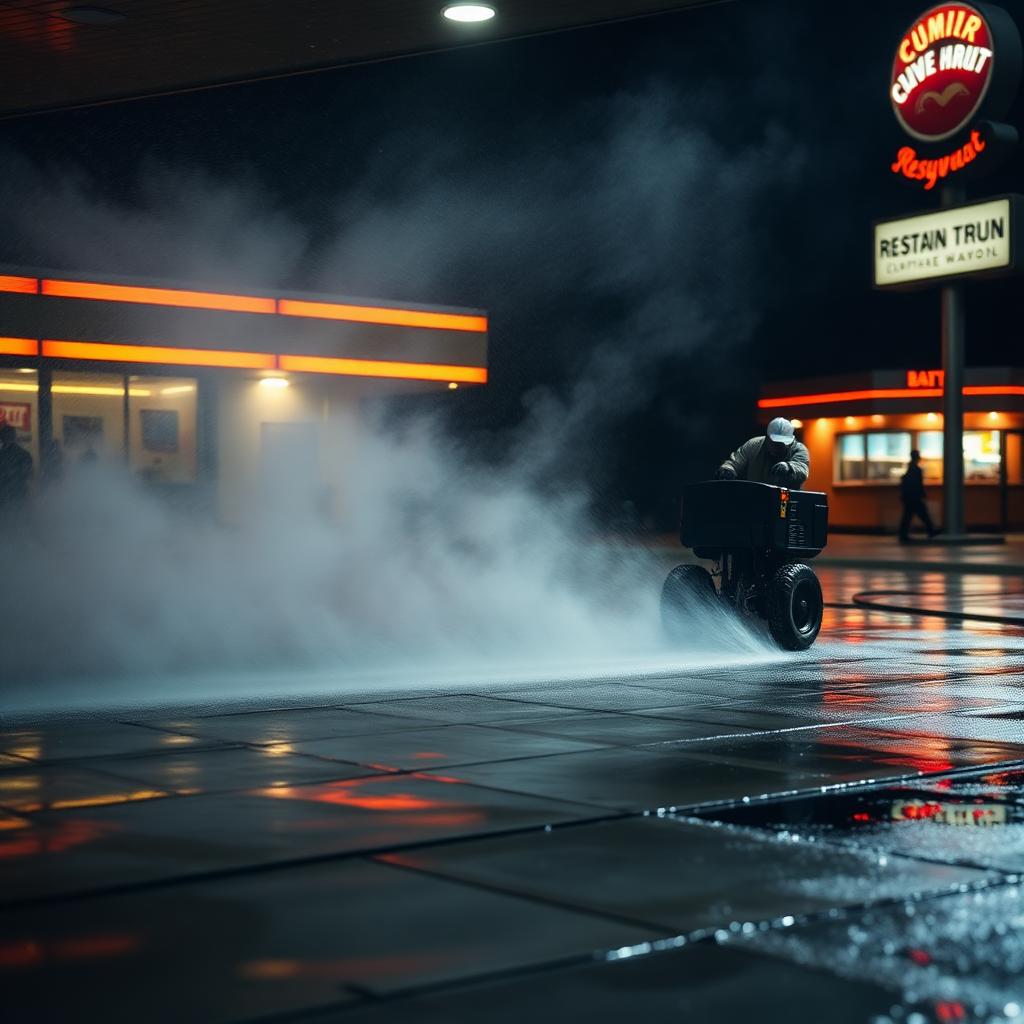
The physics is simple. Heat breaks down grease, oil, fats, waxes, and organic buildup in a way cold water and pressure alone will never touch. You can throw 4,000 PSI of cold water at a grease-soaked concrete pad behind a fast food joint all day long and you'll move it around, not lift it. Hit it with 200°F water and a proper degreaser and it emulsifies right off the surface — cleanly, quickly, and without you standing there for two hours grinding.
Real-world impact on jobs you already do:
- Concrete driveways clean twice as fast. Oil stains actually come out instead of ghosting.
- House washes finish quicker with less chemical because heat activates surfactants.
- Fleet washing gets road film off, not just dust — trucks look detailed, not rinsed.
- Fence and deck cleaning strips old sealer and gray weathering with far less dwell time.
- Rust and battery acid on concrete respond to heat and acid together in ways cold water never will.
The work you cannot get without hot water
This is the part most guys don't think about until they've been passed over on a bid. There is a whole category of commercial pressure washing that requires hot water — not "prefers," requires. If your rig can't produce it, you are not in the running.
- Kitchen exhaust hood cleaning — NFPA 96 work is a hot-water game, period.
- Restaurant drive-thrus, dumpster pads, and grease trap surrounds.
- Grocery store entryways and sidewalks with baked-in food and gum.
- Gas station canopies, fuel islands, and concrete under pump areas.
- Fleet degreasing on heavy equipment, trailers, and shop floors.
- Chewing gum removal on commercial sidewalks and mall entryways.
- Industrial machinery and manufacturing floor cleaning.
Every one of those categories is repeat, contract, high-ticket work. Property managers don't call around every month — they find a hot water contractor and they stick with them. That's the difference between chasing one-off residential jobs on Facebook and running scheduled routes with a signed agreement.
The money side — say it out loud
Here's what nobody tells you when you're shopping your first machine: the ticket size on hot water work is not incrementally better. It's a different world.
Hot water commercial work commonly bids at $150–$400+ per hour depending on the account. Residential cold water often lives at $75–$150.
Monthly restaurant, retail, and property management contracts turn one good customer into $10K–$60K+ per year — before you add extras.
Heat does the work chemistry and pressure can't. Jobs finish faster, one operator does more, and gross margin per hour goes up.
We're not going to promise you a number, because your market and your bids are yours. But we will tell you what we've seen for 12 years running trucks and selling machines: the guys who add hot water almost never go back. They upgrade, they add a second one, they trade up to a trailer or a truck mount. They don't downgrade to cold.
"Hot water" on your truck is marketing
Something quiet happens once you can honestly advertise hot water pressure washing. Customers who don't fully understand the trade still feel that hot water sounds more professional, more thorough, more industrial. Because it is. Every restaurant manager, HOA board, and facilities director you talk to has been burned by a cold-water guy with a homeowner-grade rig. When you show up and your truck says Hot Water Pressure Washing, you've already answered a question they were about to ask.
Some customers will simply pick you off the phone call because you said "hot water" and the last guy didn't. That's not a sales trick — that's the market rewarding a real capability.
What you actually need to run hot
If you're thinking about making the jump, here's the honest version. A hot water machine is more machine than a cold water unit. There's a burner, a coil, a fuel supply, and a thermostat — and they all need to be maintained. That's not a warning, it's a reality. But it's the reason your machine can do what other people's can't, and it's the reason we exist as a shop. When something goes sideways, you don't have to ship your rig to another state. You bring it to us, or we come to you.
Typical setups that make sense at different stages:
- Skid-mounted hot water unit for a pickup — great starting point for residential-plus-light-commercial.
- Trailer build with hot water, water tank, and reels — the standard commercial workhorse.
- Full truck mount with dual machines, reclaim, and on-board water — for kitchen exhaust and route work.
- Custom builds for guys running specialty work (soft washing, roof, industrial) that need heat plus specific plumbing.
The honest close
If you're running cold water and paying your bills, keep running cold water. You're not doing it wrong. But if you've been getting outbid, or you're tired of turning down commercial calls, or you've hit the ceiling on what residential can pay — hot water isn't a nice-to-have. It's the next move.
Come by the shop. Tell us what you're running now, what jobs you keep losing, and what you want to be quoting a year from now. We've been on both sides of that conversation for a dozen years — behind the wand and behind the counter. We'll tell you honestly whether hot water is your next machine or your next two years. No pressure, no sales script.
Come talk to somebody who's actually run the trucks.
We'll show you the machines, walk you through what fits your work, and help you spec a rig that pays for itself. Or start a custom build — we do those every week.